Loading…
K6
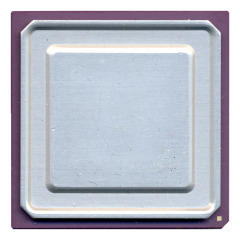
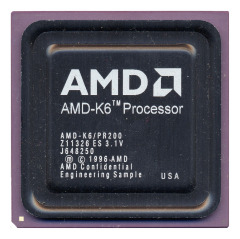
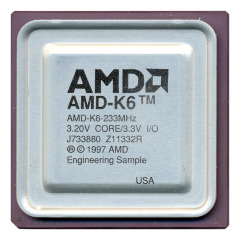
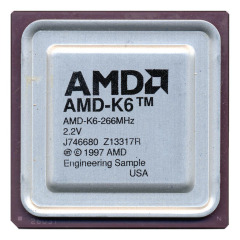
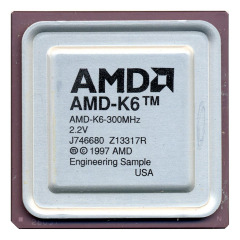
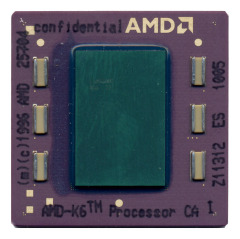
Launched in 1997The AMD K6 is a Socket 7 x86 processor introduced in 1997 and derived from NexGen technology acquired by AMD, designed to compete more effectively with Intel’s Pentium and Pentium II by combining strong IA-32 compatibility with a compact, efficient superscalar microarchitecture. Internally, the K6 uses dynamic execution techniques including register renaming, speculative execution, and translation of x86 instructions into RISC-like internal operations, allowing higher instruction-level efficiency than a conventional Pentium-class core. Early K6 models were built on a 0.35 µm process and later shrunk to 0.25 µm, while retaining a large 64 KiB split L1 cache and standard Socket 7 platform compatibility, which helped AMD remain competitive without requiring a proprietary slot or new infrastructure. Technically, the K6 is best understood as the processor that established AMD as a serious post-486 competitor in the mainstream desktop market.