Loading…
Cyrix
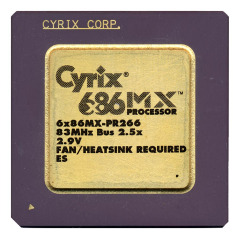
1988-1997Cyrix was founded in 1988 in Richardson, Texas, by former Texas Instruments engineers. Unlike Intel, AMD, or other traditional CPU vendors, Cyrix was initially a fabless designer focused on math coprocessors and high-performance x86-compatible processors manufactured by third parties such as Texas Instruments, IBM, and SGS-Thomson. Its first major success came with the 486-era 5x86, but Cyrix became especially well known in the mid-1990s with the 6x86 family, which was designed to compete with Intel’s Pentium. Architecturally, the 6x86 was very strong in integer workloads and office applications, often delivering performance comparable to or better than higher-clocked Pentiums in business software. However, its floating-point unit was significantly weaker, which hurt performance in 3D games and other FPU-heavy applications, an increasingly important weakness as the consumer PC market shifted toward multimedia and gaming.
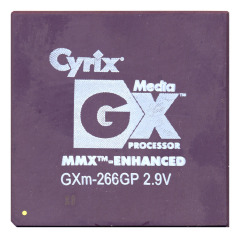
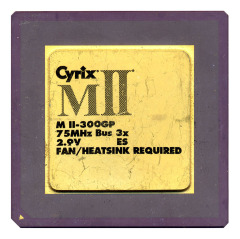
Cyrix’s later designs, including the MII and the MediaGX, showed both its technical originality and its limitations. The MediaGX was particularly notable for its high level of integration, combining the CPU with chipset and multimedia functions in a very compact, low-cost solution aimed at entry-level PCs. That made it an early precursor to highly integrated x86 system designs, but it could not offset Cyrix’s growing difficulties. The company struggled with thermal issues, inconsistent platform quality, weak floating-point performance, and aggressive competition from Intel and AMD. In 1997, Cyrix was acquired by National Semiconductor, which tried to reposition its technology toward low-cost and embedded markets rather than the high-performance desktop segment. That strategy had limited success, and in 1999 National sold the Cyrix assets to VIA Technologies. By then, Cyrix had effectively disappeared as a serious competitor in the mainstream x86 CPU market, but it remains notable for having been one of the last independent x86 challengers and for pushing unusually aggressive designs under severe manufacturing and business constraints.