Loading…
Intel
Funded July 18, 1968Intel was founded in 1968 by Robert Noyce and Gordon Moore, and quickly became one of the defining companies of the semiconductor industry. After early success with memory chips, Intel shifted toward microprocessors in the 1970s with parts such as the 4004, 8008, and 8080, then established the basis of the modern PC market with the 8086 and 8088. The x86 family became dominant after IBM selected the 8088 for the original IBM PC in 1981. Through the 1980s and 1990s, Intel consolidated that position with the 286, 386, 486, and then the Pentium line, combining strong in-house manufacturing with increasingly advanced microarchitectures. Unlike many competitors, Intel controlled both CPU design and leading-edge fabs, which gave it a major advantage in performance, volume, and market influence.
By the late 1990s and 2000s, Intel was the clear dominant force in x86. It experimented with several architectural directions, including the short-lived Itanium for IA-64, but its mainstream business remained centered on x86 processors such as Pentium II, Pentium III, and Pentium 4. After the NetBurst era reached its limits in power and efficiency, Intel recovered decisively with the Core microarchitecture in 2006, which restored performance and efficiency leadership over AMD. By the end of the 2000s, with Core 2, Nehalem, and its integrated memory controller and QuickPath interconnect, Intel had reinforced its dominance in both desktop and server markets. Historically, Intel was not just the original creator of x86, but the company that turned it into the standard architecture of personal computing.
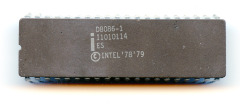 8086
1 CPU
8086
1 CPU
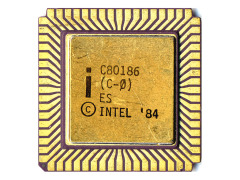 80186
3 CPUs
80186
3 CPUs
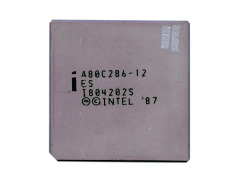 80286
2 CPUs
80286
2 CPUs
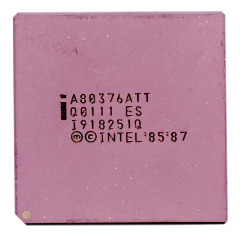 80386
4 CPUs
80386
4 CPUs
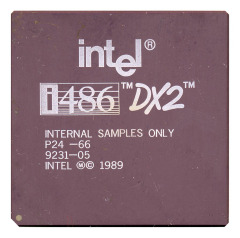 80486
5 CPUs
80486
5 CPUs
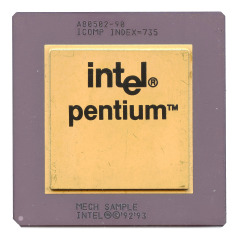 Pentium
15 CPUs
Pentium
15 CPUs
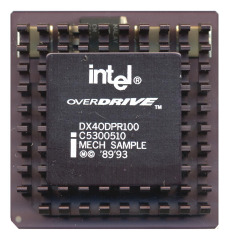 Overdrive
5 CPUs
Overdrive
5 CPUs
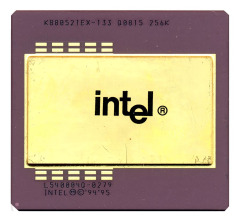 Pentium Pro
4 CPUs
Pentium Pro
4 CPUs
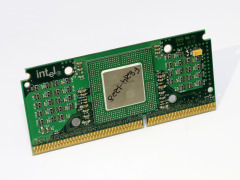 Celeron
15 CPUs
Celeron
15 CPUs
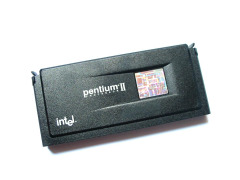 Pentium II
11 CPUs
Pentium II
11 CPUs
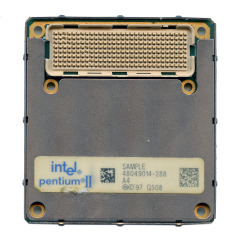 Pentium II Mobile
4 CPUs
Pentium II Mobile
4 CPUs
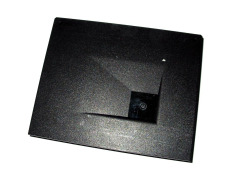 Pentium II Xeon
5 CPUs
Pentium II Xeon
5 CPUs
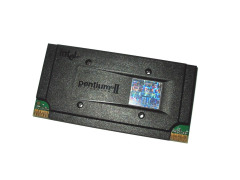 Pentium III
12 CPUs
Pentium III
12 CPUs
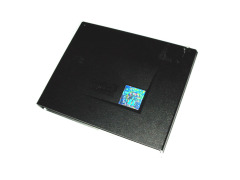 Pentium III Xeon
6 CPUs
Pentium III Xeon
6 CPUs
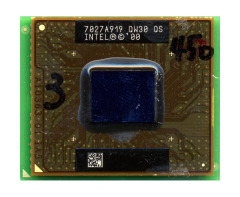 Pentium III Mobile
8 CPUs
Pentium III Mobile
8 CPUs
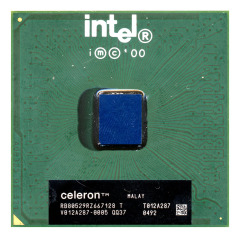 Timna (Unreleased)
1 CPU
Timna (Unreleased)
1 CPU
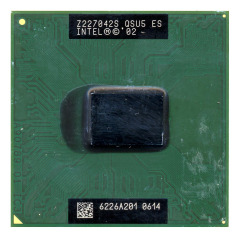 Pentium M
1 CPU
Pentium M
1 CPU
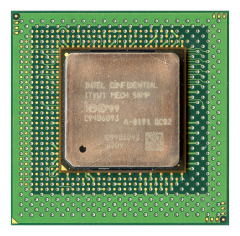 Pentium 4 (Socket 423)
8 CPUs
Pentium 4 (Socket 423)
8 CPUs
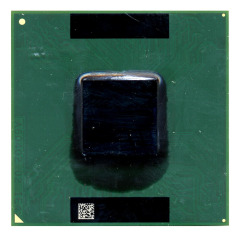 Pentium 4-M
1 CPU
Pentium 4-M
1 CPU
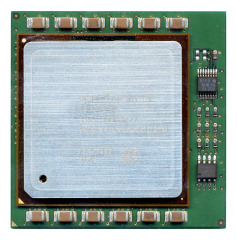 Xeon
2 CPUs
Xeon
2 CPUs
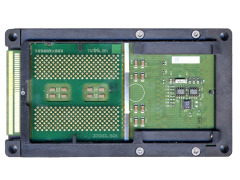 Itanium
7 CPUs
Itanium
7 CPUs