Loading…
80286
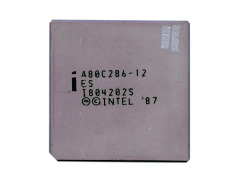
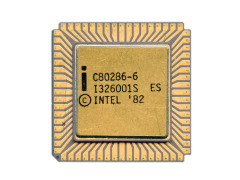
Launched in 1982The Intel 80286 is a 16-bit x86 microprocessor introduced in 1982 that preserved full backward compatibility with the 8086 software model while substantially extending the architecture toward higher-performance and multiuser systems, combining a 16-bit ALU and external data bus with a 24-bit physical address space capable of accessing up to 16 MiB of memory. In real mode it behaves largely as a faster 8086, retaining segmented addressing and the classic IA-16 register set, but its defining innovation is protected mode, which replaces the simple segment-shift mechanism with descriptor-based address translation using segment selectors, descriptor tables, privilege levels, access rights, and hardware-enforced memory protection. The 80286 introduced the architectural foundations of modern x86 protection semantics, including ring-based privilege separation, task state segments, hardware task switching, and support for isolated execution environments suitable for multitasking operating systems. Although it still lacks paging and remains fundamentally a 16-bit processor internally, the 286 represented a major step beyond the 8086/80186 by transforming x86 from a single-user microcomputer architecture into one capable of supporting secure, structured operating systems, even if its protected mode was later seen as limited by the inability to switch cleanly back to real mode without a reset on early implementations.