Loading…
Transmeta
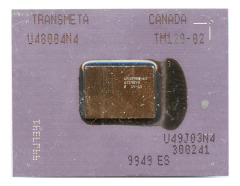
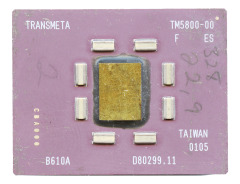
1995-2005Transmeta was founded in 1995 and became one of the most unusual x86 CPU companies of its era. Rather than building a conventional x86 processor, Transmeta designed very low-power VLIW-based cores that executed a proprietary software translation layer called Code Morphing Software. The idea was to present a standard x86-compatible environment to the operating system while internally translating x86 instructions into native operations optimized for the underlying hardware. Its first commercial processors, the Crusoe family, appeared around 2000 and were aimed primarily at mobile and ultra-portable systems. Technically, Crusoe was notable for its very low power consumption, aggressive power-management features such as LongRun, and its highly unconventional separation between hardware and instruction-set compatibility. In lightweight office and mobile workloads, this made Transmeta an interesting alternative to Intel, especially at a time when notebook efficiency was becoming more important. However, the cost of dynamic translation and the relatively weak floating-point and general performance of Crusoe limited its appeal outside niche low-power designs.
Transmeta later introduced the Efficeon, a more advanced follow-up with a wider architecture, better memory support, and improved overall performance, but it still struggled against rapidly improving low-power processors from Intel and AMD. Although the company attracted a great deal of attention because of its novel technical approach and the prominence of some of its engineers, it never achieved significant commercial success in the mainstream x86 market. By the mid-2000s, Transmeta had largely abandoned the idea of competing as a processor vendor and shifted toward licensing its technologies and intellectual property, particularly in power management and microarchitectural techniques. The company eventually disappeared as a CPU manufacturer, but its historical significance remains substantial: Transmeta demonstrated that x86 compatibility could be implemented through a software translation layer rather than hardwired native execution, making it one of the boldest architectural experiments in the history of PC processors.